
The apartment in Wudaokou, Beijing had no heat.
This mattered because Beijing gets cold. Not the kind of cold where you wear a sweater. The kind where your breath fogs and stays there, like it's thinking about freezing solid. We had four roommates from four countries, which sounds cosmopolitan until you realize we were all just students—with student means.
One was an Indonesian-Chinese pianist. Twenty-something. Peking University. Called himself Zhang.
Zhang lived by Theodore Roosevelt's advice:
"Do what you can, with what you have, where you are."
Roosevelt probably meant it metaphorically. Zhang took it literally.
The building was still under construction. Some mornings we'd wake up to drilling. Hot water came and went—mostly went. We took cold showers in October. In retrospect, we were accidentally doing the Wim Hof method. At the time, we just called it Tuesday.
My room was minimal. Floor for a desk. Floor for a chair. Floor for, occasionally, sleeping. One day Zhang walked in.
"You could extend your bed into a workbench."
I looked at the floor. "It's already a workbench."
"No. A real one."
"With what?"
"The bed."
"The bed is the bed."
He shrugged. "Not for long."
Before I could argue, he was already dismantling it. No measurements. No plan I could see. Just Zhang, humming something Indonesian, pulling apart wooden slats like he'd done it a hundred times before.
What emerged wasn't a bed anymore. It was a retractable bench. The kind of thing IKEA would charge $300 for and deliver in forty-seven pieces.
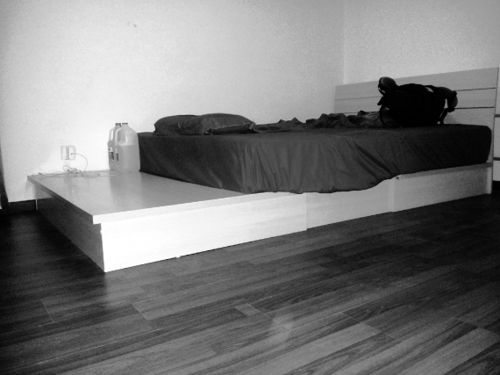
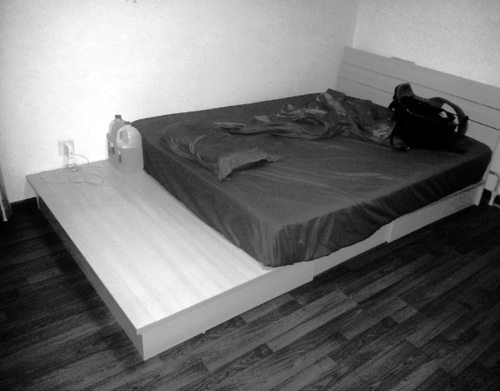
You had to see it work to believe it. Einstein said something about education interfering with learning. I was starting to understand. My problem wasn't the floor. It was that I'd accepted the floor.
Three weeks later, I came home to destruction.
Zhang had his wardrobe in pieces. Doors off. Shelves out. The whole thing looked like a crime scene for furniture.
"Table," he said, before I could ask.
"You're making a table from your wardrobe."
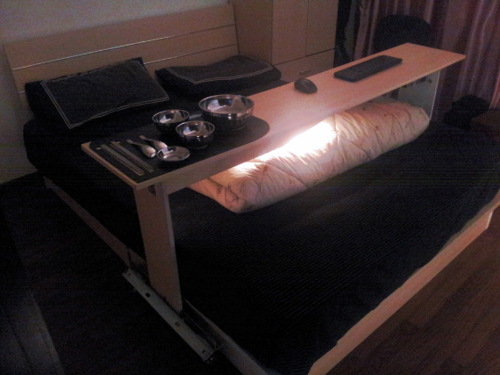
"Sliding table. Over the bed. For eating. Working. Movies."
"Right."
"It'll be good."
The wardrobe door became the tabletop. Perfect size, apparently. He set it across the bed, then stopped. Frowned. Started again.
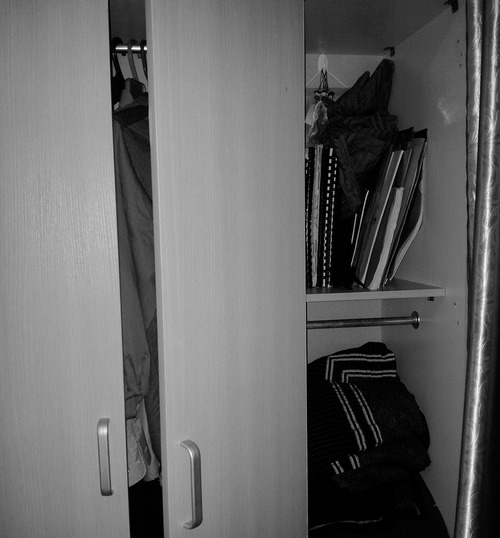
The table needed to slide. So he added wheels. Not good wheels—wheels from somewhere, probably scavenged. But they worked. He built tracks. The whole contraption glided back and forth like it had always been meant to do exactly that.
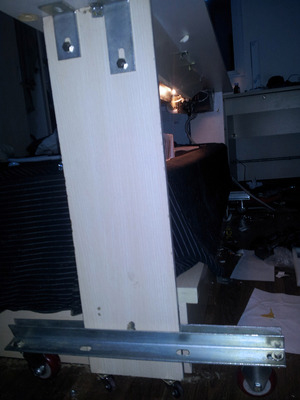
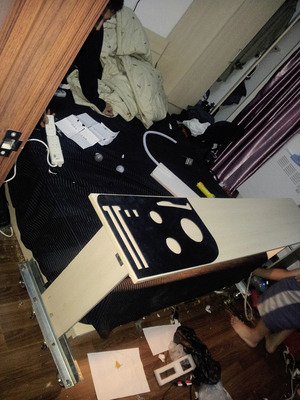
Then he got ambitious.
Under-glow lighting from LED strips. Speakers wired underneath. A lamp fashioned from washing machine hoses—because apparently that's what you do with washing machine hoses if you're Zhang. Charging cables threaded through custom channels. Organizers for tableware. Rubber mats for grip.
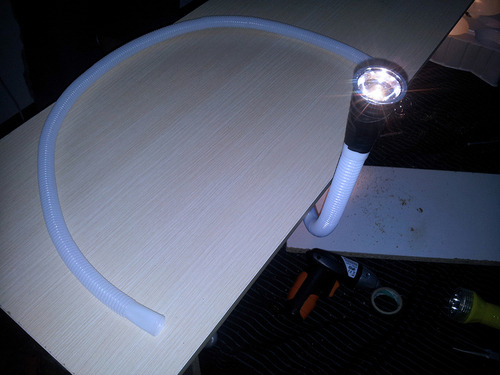
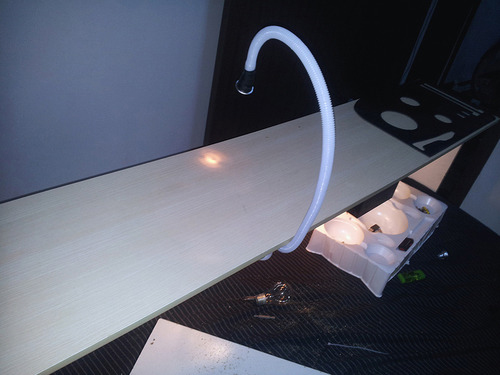
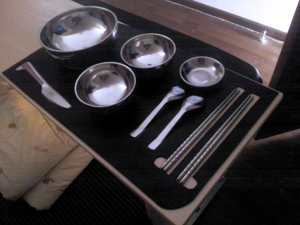
We joked that it was gaining consciousness. If Xzibit from "Pimp My Ride" showed up, he'd have taken notes.
The finished product:
- Slid the width of his bed
- Served dinner
- Charged phones
- Played music
- Lit up like a spaceship
- Probably did his taxes
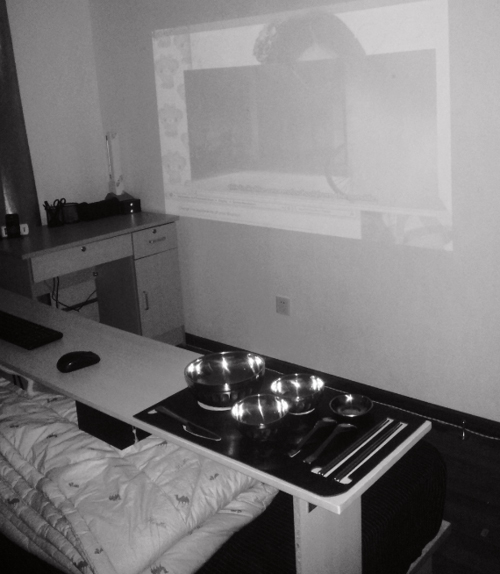
Later I learned there's a word for this: bricolage. Making do. The art of what's at hand.
But that's just French for what Zhang already knew.
Who looks at a bed and sees a workbench? Who makes lamps from hoses? Who turns a wardrobe into mission control?
My roommate, Zhang, does.
The apartment taught me something. Not about furniture. About seeing.
The resources were always there. I just hadn't looked.
P.S. Thanks to Hacker News for the discussion. geocrasher suggested "ingenious" instead of "genius." It's fair and spot on. But if you'd seen that table, you'd understand why I went with the bigger word.